In industries driven by innovation, bringing a breakthrough from the lab to the market does not happen in a single leap, but rather follows a carefully staged journey. Because so much of this process happens before reaching the broader public, the stages along the commercialization path are not widely known. Each step plays a critical role to reduce technical, financial, and operational risk while building confidence in the technology’s real-world potential.
At Aduro Clean Technologies, we are currently in the pilot stage of our Hydrochemolytic™ Technology (HCT) for chemical recycling of waste plastic—a pivotal stage that bridges controlled lab research with scalable industrial applications. But scaling a technology isn’t just about making it bigger; it’s about proving it works, safely, efficiently, and repeatedly, every step of the way.
Let’s take a closer look at how innovative technologies scale, the technology commercialization process, and where Aduro stands on that path today.
The Five Key Stages of Commercialization
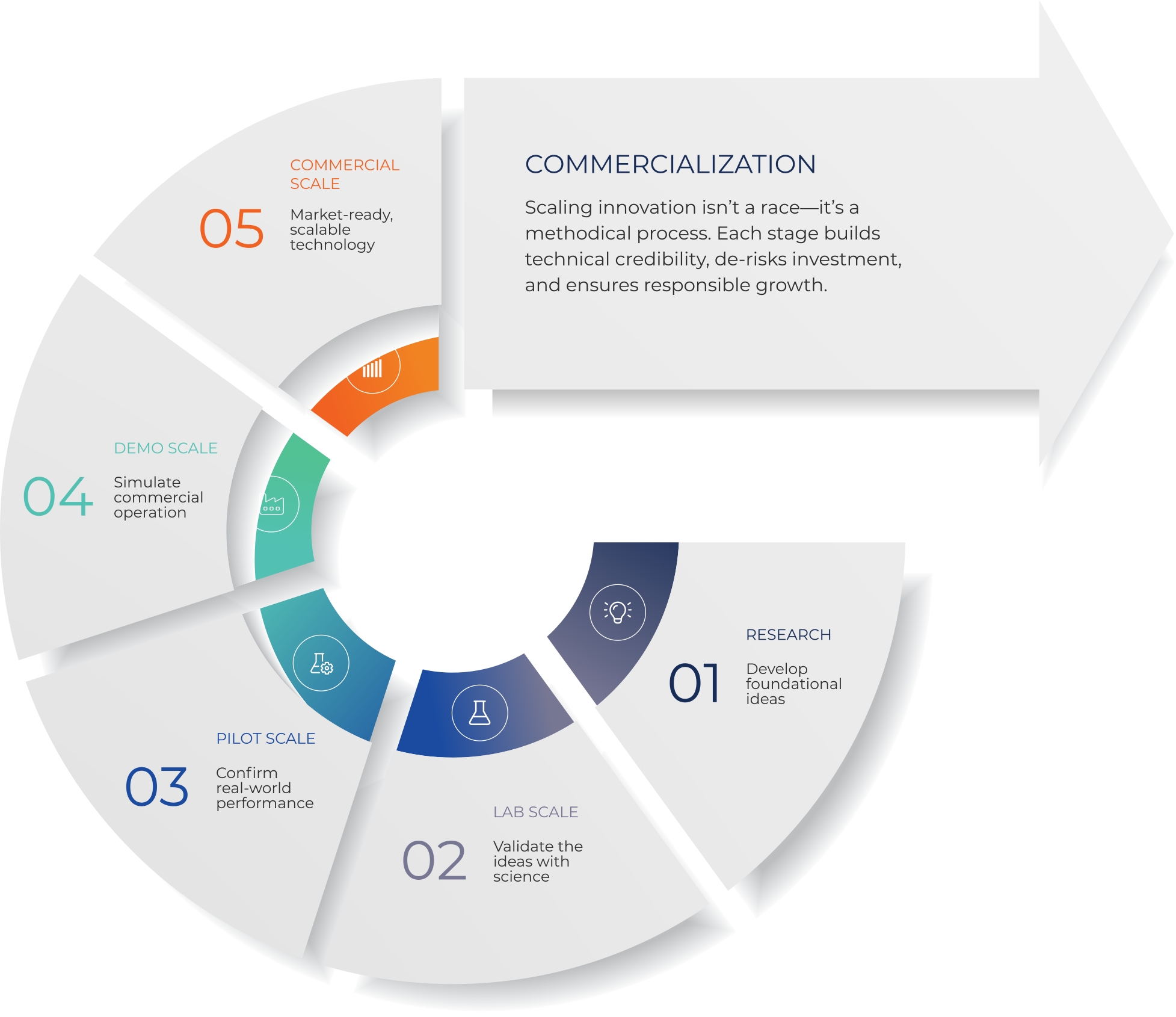
1. Research & Development
The journey begins with science. In this stage, innovators develop foundational ideas, theoretical models, and initial experiments.
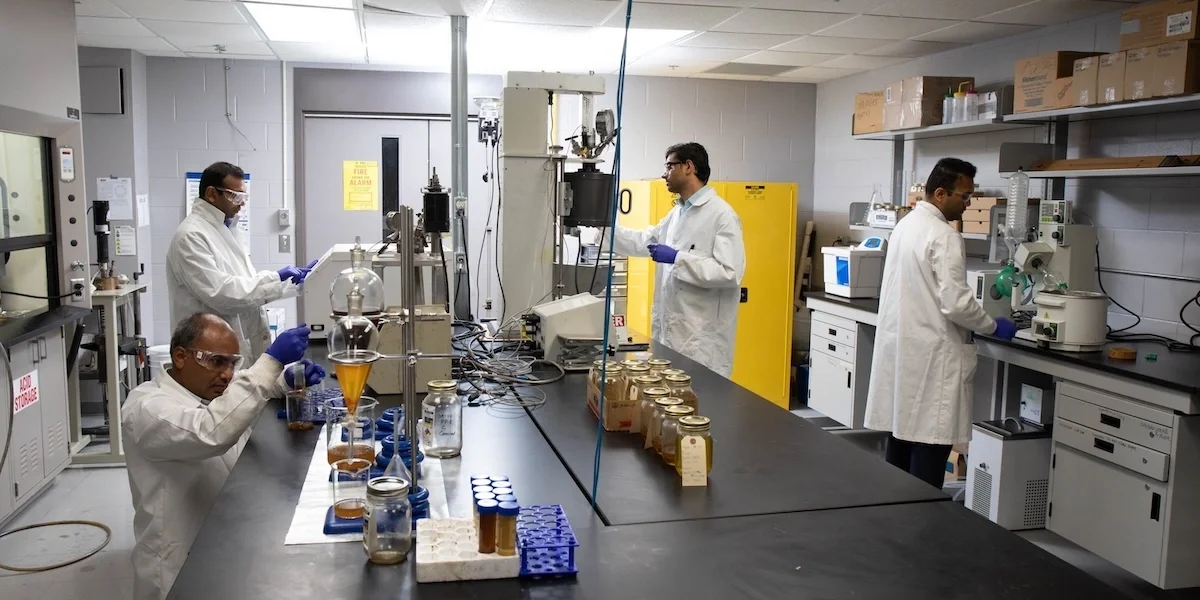
The objective is to generate scientific concepts that form the foundation of a technology commercialization roadmap. These discoveries often become intellectual property (IP), helping to establish a company’s position in the innovation pipeline and attract early interest from investors. Proof-of-concept experiments provide critical validation data that demonstrate feasibility and help organizations build investment readiness before scaling further.
Our example:
Our early work focused on research and investigation in the bitumen upgrading space. The initial goal was to find better ways to upgrade heavy petroleum. In pursuit of alternatives to conventional petrochemical technologies, Aduro scientists took a different approach that resulted in the invention and development of Hydrochemolytic™ Technology. The R&D team took their learnings gathered over the years and applied them to further expand the scope of the core technology to the recycling of waste plastics. From lab notebooks to patents, this stage yielded critical intellectual property and experimental groundwork.
2. Lab Scale
Lab-scale experimentation puts it to the test in small, controlled settings. Here, the goal is to validate the chemistry and understand process parameters.
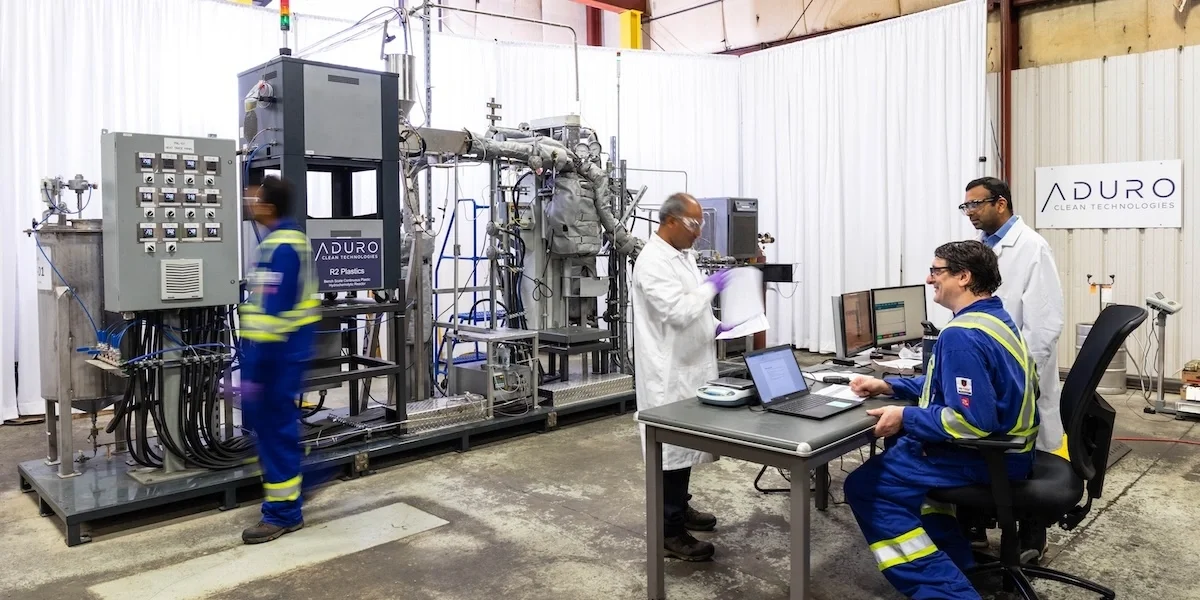
During the lab-scale stage of a technology commercialization process, innovators focus on proof of scalability and market validation through repeatable experiments. This stage often defines the technology readiness level (TRL), generating reliable data that inform process design and set the foundation for future scale-up. It’s where early-stage deep-tech investment becomes more tangible, supporting companies as they build a track record of operational excellence and prepare for a pilot-to-commercial transition.
Our example:
Across both waste plastic chemical recycling, and bitumen partial upgrading, we conducted extensive lab-scale trials using bench-scale, semi-continuous, and continuous-flow reactor systems. This work culminated in the development and operation of our continuous-flow R2 Reactor, enabling fully continuous testing and generating reproducible results and core process data—early proof that the technology works beyond theory and a strong foundation for advancing to pilot-scale operations.
3. Pilot Scale — Where our Hydrochemolytic™ Technology is now
Pilot plants are the first real-world test of a technology’s performance under continuous operation and with real inputs. It’s where lab success meets industrial reality.
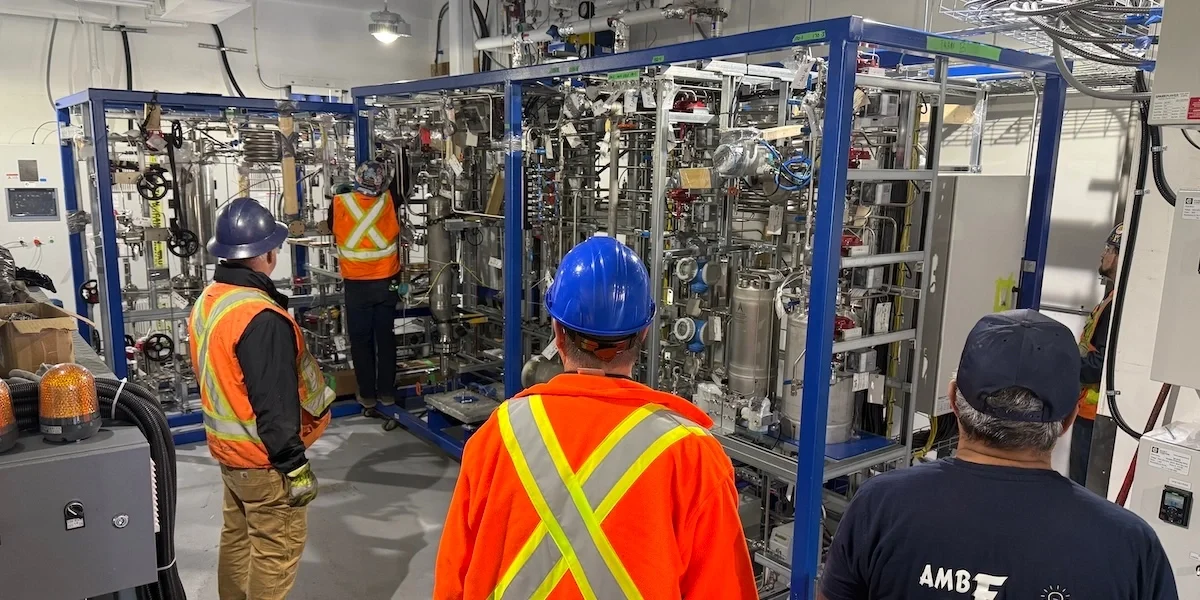
At the pilot stage, companies focus on technology validation, long-duration testing, and gathering operational data to prove commercial scalability. This is a critical milestone on the commercialization roadmap, showing investors that the company is managing capital efficiency, de-risking technology, and developing a repeatable, investment-ready process. Pilot operations strengthen strategic partnerships and set measurable commercial milestones that demonstrate a clear growth trajectory toward the demonstration stage.
Our status:
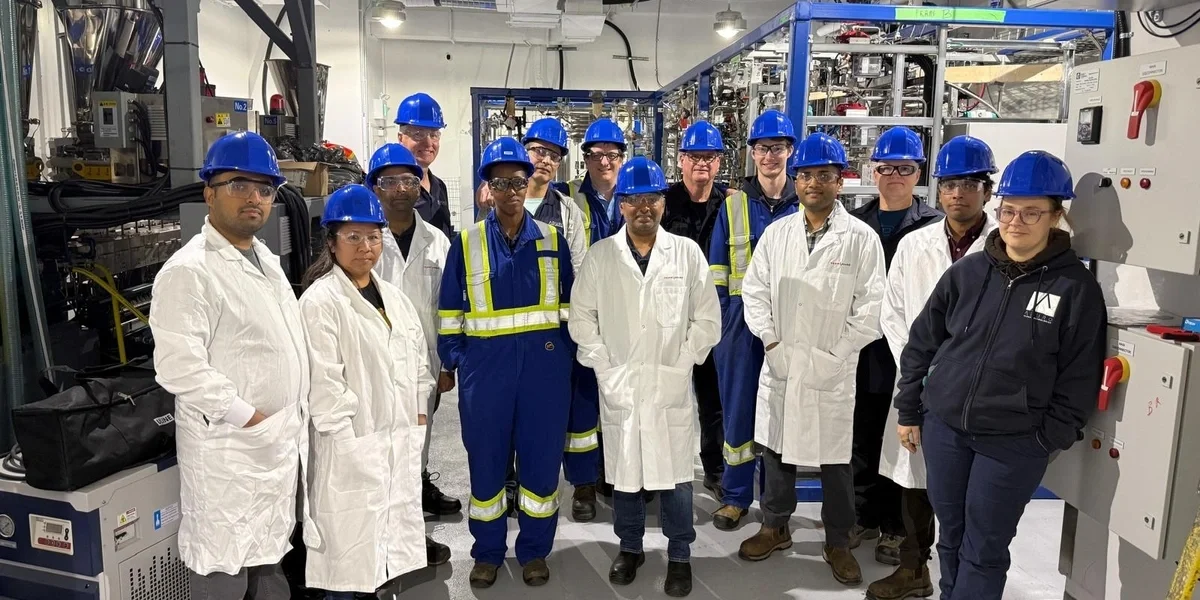
With our Next Generation Process (NGP) Pilot Plant built, fully integrated, and commissioned, we are now using the system for long-duration testing, with a focus on extended continuous operation, refining automation, and collecting operational data to guide our next scale-up step. As a pre-profit validation stage, this pilot work is a critical part of advancing Hydrochemolytic™ Technology toward industrial-scale deployment.
4. Demonstration Scale — Next for our Hydrochemolytic™ Technology
Demonstration plants are intermediate-sized systems. In terms of chemical recycling processes, a demonstration – or First-of-a-Kind (FOAK) facility – simulates commercial operation on a smaller scale, helping validate the technology’s reliability, cost-efficiency, and product quality, and is typically capable of processing 1–10 tonnes per day.
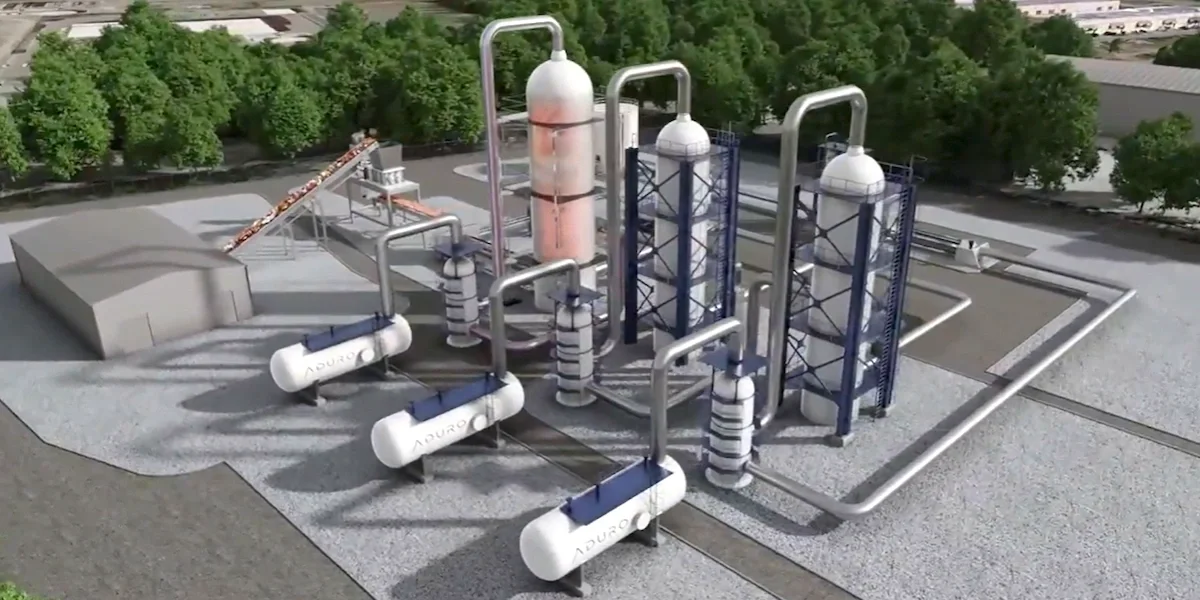
At this stage, a company proves market readiness by generating product qualification data and performing techno-economic studies that support investment and scale-up decisions. Demonstration-scale (FOAK) facilities are often pivotal in securing scale-up capital, forming public-private partnerships, and supporting the development of licensing and replication models. This is where commercialization funding and strategic partnerships come together to bridge the gap between a pre-revenue company or scaling startup and a commercial-scale enterprise, enabling confident market entry and repeatable deployment.
Our next step:
Building on results from the NGP Pilot Plant, we’re advancing front-end engineering and evaluating sites and partner options for our Demonstration (FOAK) facility. This work is focused on defining facility scope, integration requirements, and operating configurations needed to validate Hydrochemolytic™ Technology at industrially relevant scale. In parallel, it will help establish the operating data and design basis needed to support future licensing and repeatable deployment as we prepare for broader commercialization.
5. Commercial Scale
At this stage, the technology is market-ready. Whether through full-sized facilities or modular deployments, the focus shifts to delivering value, generating revenue, and scaling impact.
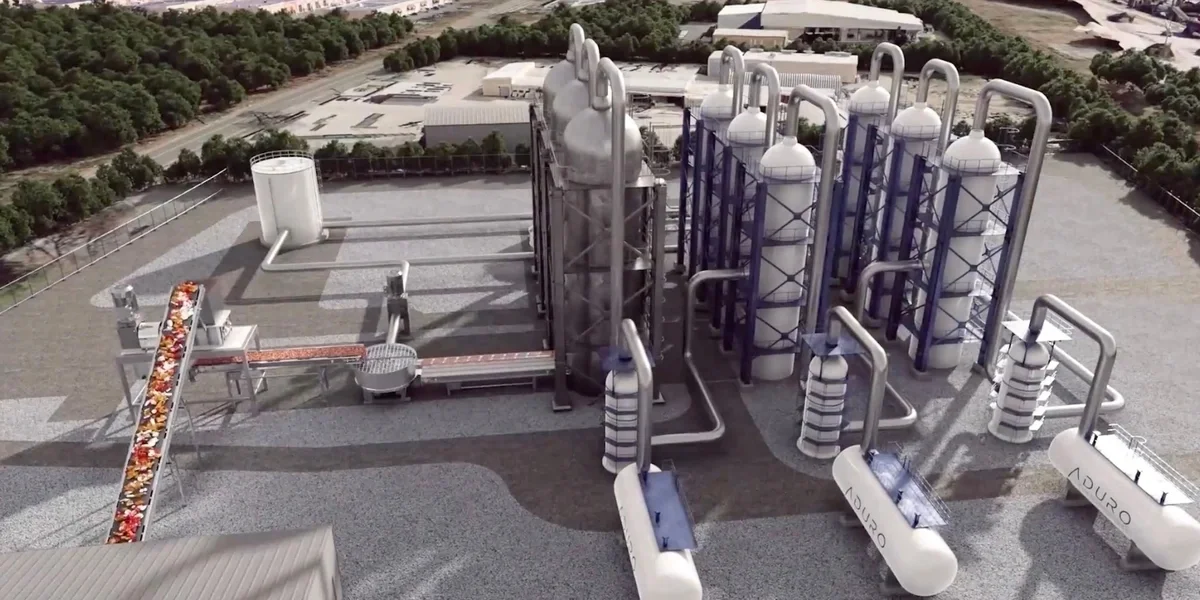
The commercial stage represents the realization of a full commercialization strategy. Companies now deploy scaling technology at industrial scale, achieving market expansion and driving sustainable growth strategy. This is where revenue generation, customer contracts, and long-term investor confidence materialize, supported by a proven technology roadmap and disciplined execution. Success at this level signals commercial maturity — the culmination of a well-structured business scale-up process built on trust, validation, and innovation.
At Aduro, we remain committed to advancing our journey toward commercialization with unwavering scientific rigor, disciplined execution, and transparent communication with all stakeholders.
Why the Stepwise Approach Matters
Scaling innovation isn’t a race — it’s a methodical process. Each stage builds technical credibility, de-risks investment, and ensures responsible growth.
Following a defined commercialization roadmap allows companies to transform early-stage ideas into scalable, investable technologies. Each stage — from research through demonstration — adds value by generating proof points that attract early-stage investment opportunities and innovation investment, and strengthen investor confidence. This structured approach not only clarifies a company’s growth trajectory and helps map its position on the technology adoption curve, but also provides measurable indicators of technology readiness and capital efficiency.
By progressing step-by-step, innovators can manage investment risk, prioritize go-to-market strategies, and demonstrate proof of scalability before committing large resources. This process encourages smarter capital decisions, facilitates strategic partnerships, and lays the groundwork for sustainable, long-term success.
For investors, this framework offers transparency and predictability — key attributes of any emerging technology company or growth-stage company seeking to build credibility. Each milestone achieved serves as both a technical validation and a commercial signal that the company is executing effectively on its business growth stages. These commercialization success stories serve as social proof for investors and partners, turning technical progress into compelling commercial narratives.
Ultimately, this disciplined, stepwise approach represents the foundation of sustainable technology investment. It helps companies build operational excellence, ensures responsible market expansion, and accelerates the commercial innovation pathway that turns cutting-edge research into real-world impact.
Where Aduro Is Today — and What’s Ahead
-
Today: We're processing real feedstocks, testing automation, and collecting operational data that will inform our next scale.
-
Next: We're deep into engineering design for our demonstration plant, identifying site locations, and lining up partners.
-
Future: With validated pilot and demo results, Aduro will be positioned for licensing and commercial deployment.
“While we validate our pilot-scale results, we’re already laying the foundation for our demonstration plant — ensuring Aduro is always one step ahead.”
Conclusion: Building Trust, Step by Step
Commercialization is not just about technology. It is fundamentally about trust, earned through data, discipline, and a proven, stepwise approach.
Follow our journey to learn more about Hydrochemolytic™ Technology and the real-world impact that it will have as we progress along our path to commercialization.